Home
Home
BBW What It Means for Body Identity and Modern Culture
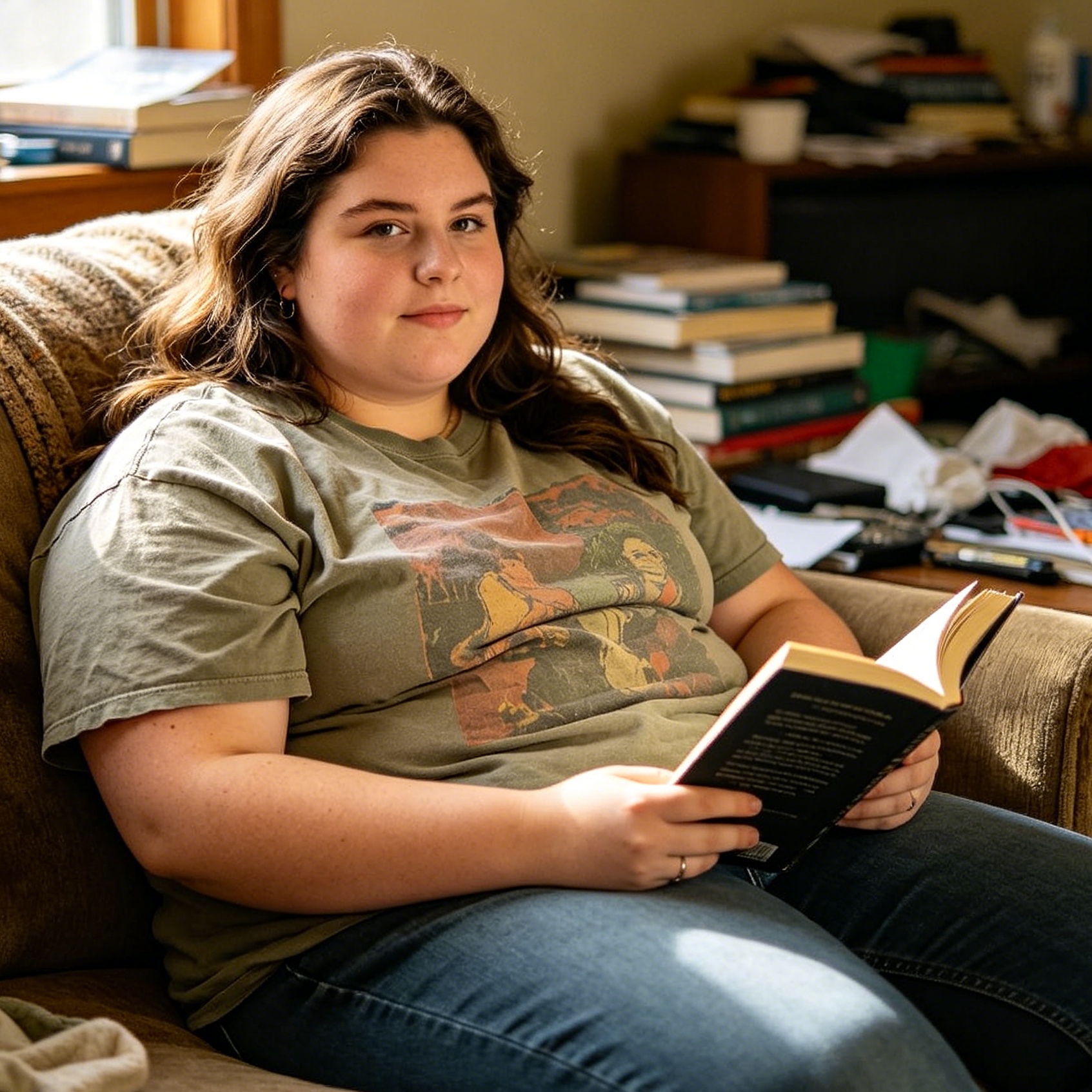
Language serves as a mirror to societal shifts, and the acronym BBW stands as a prominent example of how a simple phrase can evolve into a complex cultural identifier. At its most basic level, BBW stands for Big Beautiful Woman. While the literal definition refers to plus-size or fuller-figured women who are perceived as attractive, the term carries decades of history, political weight, and personal significance that extends far beyond a physical description. In the landscape of 2026, understanding this term requires looking past the surface to see how it functions in dating, fashion, and the broader body-positive movement.
The fundamental definition and modern usage
To understand what BBW means today, one must recognize it as both a self-identifier and a community label. It is used predominantly to describe women who occupy the higher end of the weight spectrum but who reject the traditional stigma associated with larger bodies. The inclusion of "Beautiful" in the acronym is intentional and corrective; it was designed to challenge the historical exclusion of plus-size women from mainstream beauty standards.
In contemporary digital spaces, the term is a high-traffic tag on social media platforms and dating applications. It functions as a beacon for community building, allowing individuals to find fashion inspiration, peer support, and romantic connections within a framework that prioritizes size-acceptance. However, its meaning can fluctuate depending on the intent of the speaker and the environment in which it is used.
Historical roots: The Carole Shaw legacy
The term did not emerge from modern internet slang. Its origins are traced back to 1979, a pivotal year for size advocacy. It was coined by Carole Shaw, who launched BBW Magazine. At a time when the fashion industry almost exclusively celebrated extreme thinness, Shaw’s publication was a radical intervention. It was the first lifestyle and fashion magazine specifically curated for plus-size women, offering them the same aesthetic consideration and lifestyle content previously reserved for smaller sizes.
Shaw’s goal was to shift the narrative from one of "fixing" the body to one of celebrating it. By trademarking the term, she provided a vocabulary for a demographic that had been marginalized. The magazine didn't just talk about clothes; it discussed self-esteem, health without the singular focus on weight loss, and the right to exist visibly in public spaces. This historical context is vital because it anchors the term in a tradition of empowerment rather than mere categorization.
Variations and the spectrum of identity
As the community surrounding the term grew, so did the vocabulary used to describe specific experiences within it. Understanding the nuances of these variations is essential for a comprehensive grasp of the term's meaning.
SSBBW: Supersized Big Beautiful Woman
While BBW is a broad umbrella, SSBBW is used to describe women at the higher end of the plus-size scale. While there is no rigid medical threshold, the community often uses this term for women who face unique societal challenges related to mobility, public infrastructure, and medical bias. For many, identifying as SSBBW is an act of radical visibility, claiming space in a world that often attempts to make bodies of that size invisible.
BBBW: Big Beautiful Black Woman
Intersectionality plays a massive role in how body identity is experienced. BBBW specifically highlights the experiences of Black women, acknowledging that beauty standards and body tropes are often racialized. This term celebrates the specific cultural aesthetics and the unique resilience of Black women within the size-acceptance movement.
BHM and BBM: The male equivalents
The movement toward size-positive terminology isn't limited to women. BHM (Big Handsome Man) and BBM (Big Beautiful Man) serve as the male counterparts. These terms have gained traction in dating and fashion circles, mirroring the shift toward celebrating fuller-figured men and rejecting the "dad bod" vs. "fitness model" binary.
The duality of the term: Empowerment vs. Objectification
One of the most complex aspects of what BBW means in 2026 is the tension between its use as a tool for empowerment and its presence in adult-oriented spaces. This duality often leads to debate within the body-positive community.
On one hand, the term is a shield. It allows women to reclaim their narrative from a medicalized or derogatory vocabulary. When a woman identifies as a BBW on her social profile, she is often signaling confidence and a refusal to apologize for her size. It is an assertion of worthiness.
On the other hand, the term has been heavily utilized in adult industries and fetish communities. This has led to the "fetishization" of larger bodies, where the person is sometimes reduced to a physical category rather than being seen as a whole individual. This nuance is why some activists prefer terms like "fat" (reclaimed as a neutral descriptor) or "plus-size," while others remain fiercely loyal to BBW because of its built-in affirmation of beauty.
BBW in the 2026 fashion landscape
The influence of the BBW movement on the fashion industry has reached a tipping point. We have moved past the era of "flattering" clothing—which was often code for hiding the body—into an era of expressive, bold fashion. In 2026, inclusive sizing is no longer a niche offering but a market expectation.
High-fashion houses and fast-fashion giants alike now utilize data-driven design to cater to the specific proportions of BBW silhouettes. This includes specialized fabric tension, anatomical draping, and the celebration of curves rather than their concealment. The term has helped drive the demand for representation on runways and in advertising campaigns, ensuring that the "Beautiful" part of the acronym is backed by visible, high-end representation.
Decoupling size from health myths
A significant part of the discourse around what it means to be a BBW involves challenging the reflexive association between weight and ill health. Modern health perspectives increasingly emphasize metabolic health, mental well-being, and lifestyle habits over the simplified metric of the Body Mass Index (BMI).
The BBW community has been at the forefront of the Health at Every Size (HAES) philosophy. This approach suggests that people of all sizes can pursue health through intuitive eating, joyful movement, and adequate medical care that is free from weight stigma. By identifying as a BBW, many individuals are choosing to prioritize their holistic health over the pursuit of a specific number on a scale, a shift that is gaining support from more progressive medical professionals in 2026.
Navigating social etiquette and allyship
Given the varied history and emotional weight of the term, how should it be used by those outside or inside the community? The most important principle is self-identification.
- Respect the Individual’s Choice: Not every plus-size woman identifies with the term BBW. Some may find it outdated or overly focused on male attraction. Others may prefer more direct terms like "fat" or "large-bodied." Always follow the lead of the person you are describing.
- Avoid Backhanded Compliments: Phrases like "You're pretty for a BBW" are inherently insulting because they suggest that beauty and size are usually mutually exclusive. The term itself already establishes that beauty is present.
- Recognize the Intent: In a dating context, using the term can be a helpful way to find compatible partners who share an appreciation for diverse body types. However, using it in a professional or casual setting where size is irrelevant can be seen as reductive or inappropriate.
- Understand the Advocacy: Being an ally to the BBW community means more than just accepting the term. It involves recognizing the systemic biases—such as smaller airplane seats, limited clothing options, and workplace discrimination—that plus-size people face and supporting efforts to create a more inclusive world.
The role of social media and the digital community
In 2026, digital platforms are the lifeblood of the BBW community. Algorithms that once suppressed larger bodies have been challenged by user-led movements demanding visibility. This has created a vibrant ecosystem where BBW influencers provide more than just fashion tips; they offer a blueprint for living a full, unapologetic life.
These digital spaces have also allowed for the global spread of the term. While it originated in a US-centric magazine, the concept of a Big Beautiful Woman is now a global identity, adapted into various languages and cultural contexts. It provides a shared language for a global struggle against narrow beauty standards.
The future of the term
As we look toward the future, the term BBW continues to adapt. We are seeing a move toward even more specific identifiers as people seek to capture the nuances of their lived experiences. Some predict the term may eventually be superseded by more clinical or more radical terms, but its legacy is secure.
The term BBW broke the ice. It was the first major linguistic tool that allowed plus-size women to claim beauty as a right rather than a privilege. Whether it remains the primary identifier or evolves into something else, the shift in consciousness it sparked—the idea that a body can be both big and beautiful without contradiction—is a permanent change in our cultural fabric.
Conclusion: A symbol of shifting standards
Understanding what BBW means requires an appreciation for the journey of self-acceptance in a world that often demands conformity. It is a term born of necessity, raised in the fires of fashion activism, and matured in the age of social media. It represents millions of women who have decided that they will no longer wait to reach a certain weight before they start living, dressing well, and being loved.
By acknowledging the history, the controversies, and the empowering reality of the BBW identity, we gain a clearer picture of the modern body-positivity movement. It is a reminder that beauty is not a scarce resource reserved for a specific body type, but a diverse and expansive reality that belongs to everyone, regardless of the space they occupy in the world.