Home
Home
The 7 Natural Wonders of the World and the Science Behind Them

Nature operates on a scale that humbles human ambition. While ancient civilizations built pyramids and colossi to assert their permanence, the planet has spent millions of years sculpting structures that dwarf any human endeavor. The official list of the 7 natural wonders of the world represents more than just scenic vistas; these sites are geological milestones and biological strongholds that define the Earth's raw power. From the highest frozen reaches of the Himalayas to the coral depths of the Pacific, understanding these wonders requires looking past the surface beauty into the complex forces that sustain them in 2026.
Mount Everest: The rooftop of the world
Mount Everest remains the ultimate symbol of terrestrial height. Located on the border between Nepal and China, its summit reaches 8,848.86 meters above sea level. This height is not static; the tectonic collision between the Indian and Eurasian plates continues to push the Himalayas upward, even as erosion and gravity work to pull them down. The mountain, known as Sagarmatha in Nepal and Chomolungma in Tibet, is composed of layers of marble, shale, and limestone that were once part of the ocean floor, a testament to the radical shifts in Earth's crust over 60 million years.
In recent years, the narrative around Everest has shifted from pure exploration to environmental stewardship. As of 2026, the management of the "Death Zone"—the area above 8,000 meters where oxygen is insufficient for human life—has become more sophisticated. Stricter regulations on waste management and a focus on supporting the Sherpa communities have redefined the climbing experience. Beyond the human drama, Everest is a unique laboratory for high-altitude biology. Species like the Himalayan jumping spider thrive at elevations where most life ceases, while snow leopards navigate the lower slopes. The mountain serves as a crucial water tower for Asia, feeding rivers that sustain billions, making its glacial health a global priority.
The Great Barrier Reef: A living masterpiece under threat
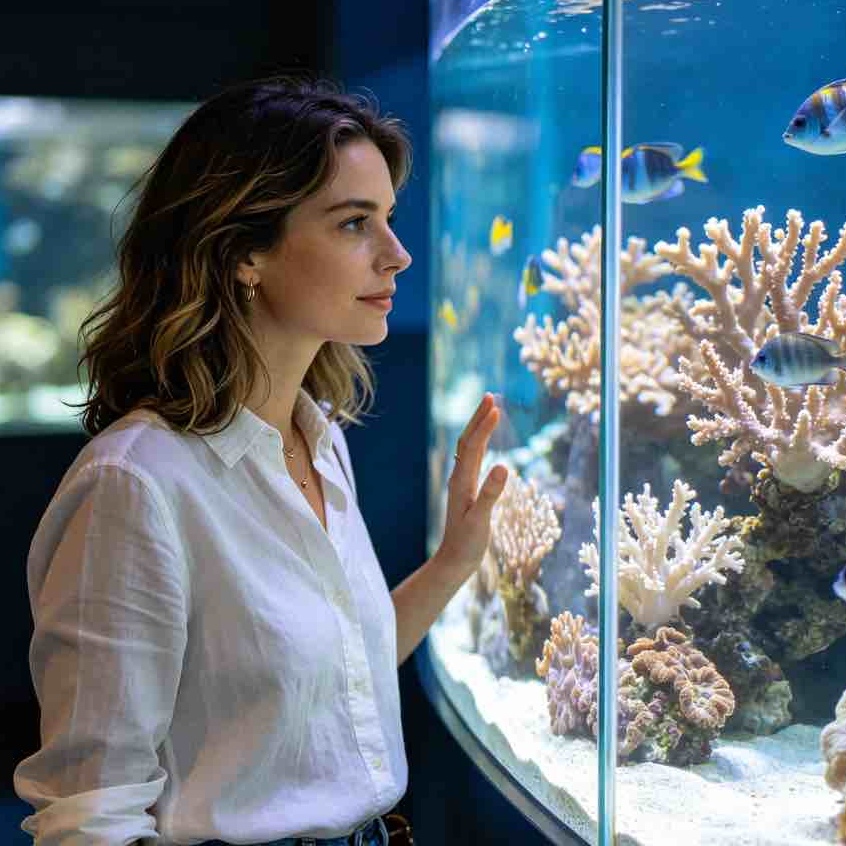
Stretching over 2,300 kilometers along the coast of Queensland, Australia, the Great Barrier Reef is the only living structure visible from space. It is not a single entity but a massive complex of nearly 3,000 individual reefs and 900 islands. The reef's biological diversity is staggering, hosting thousands of species of fish, mollusks, and sea turtles, alongside the coral polyps that build the calcium carbonate skeletons forming the reef's foundation.
By 2026, the scientific focus on the Great Barrier Reef has intensified. Innovations in coral IVF and the deployment of heat-resistant coral strains have become central to preservation efforts. While mass bleaching events caused by rising ocean temperatures remain a significant challenge, localized recovery in certain sectors demonstrates the resilience of these marine ecosystems. The reef is more than a tourist destination; it is a vital nursery for global fish populations and a protective barrier for the Australian coastline. Visitors today find a system that is in a constant state of flux, where the vibrant colors of soft corals contrast with the stark realities of environmental change.
Victoria Falls: The smoke that thunders
Locally known as Mosi-oa-Tunya, Victoria Falls creates the largest curtain of falling water on the planet. Situated on the Zambezi River between Zambia and Zimbabwe, the falls are 1,708 meters wide and drop 108 meters into the First Gorge. The sheer volume of water—averaging over 500 million liters per minute during the peak season—creates a mist that can be seen from 50 kilometers away. This spray supports a unique rainforest ecosystem that thrives in the perpetual moisture, distinct from the surrounding dry savanna.
Geologically, the falls are part of a series of basalt gorges carved by the river over thousands of years as it finds cracks in the volcanic rock. The basalt was formed 180 million years ago during massive volcanic eruptions. In 2026, the focus has turned toward balancing the hydroelectric needs of the region with the preservation of the falls' natural flow. The seasonal variation of the falls is dramatic; during the dry season, the rock face becomes visible, revealing the intricate geological patterns, while the flood season transforms the site into a deafening wall of white water. The Devil's Pool, a natural infinity pool at the edge of the falls, remains a focal point for those seeking to understand the river's power from its very brink.
The Grand Canyon: A timeline in stone
The Grand Canyon in Arizona is a 446-kilometer-long record of Earth's history. While the Colorado River began carving the canyon roughly 5 to 6 million years ago, the rocks at the bottom—the Vishnu Schist—are nearly 2 billion years old. This vertical wilderness reveals nearly 40% of our planet's history through its layers of limestone, sandstone, and shale. The canyon's scale is difficult to process: it reaches widths of 29 kilometers and depths of over 1.8 kilometers.
The ecosystem within the canyon is as varied as its geology. Because of its extreme depth, the Grand Canyon encompasses five different life zones, from the desert scrub at the river level to the boreal forest on the North Rim. Species like the California condor have seen a tenuous recovery in the canyon's thermal updrafts, while endemic plants cling to the sheer cliff faces. In the current era, management of the Colorado River's flow via the Glen Canyon Dam is a subject of constant scientific adjustment to mimic natural flooding cycles and maintain the sandbars necessary for the canyon's health. The play of light and shadow across the rust-red buttes remains one of the most profound visual experiences in the natural world.
Parícutin: The volcano that grew in a cornfield
Parícutin is unique among the 7 natural wonders because humans witnessed its entire birth and growth. In 1943, a farmer in Michoacán, Mexico, noticed a crack in his field that began emitting smoke and ash. Within a year, a cinder cone had risen 336 meters. By the time the eruption ceased in 1952, the volcano reached 424 meters, having buried two villages and covered 25 square kilometers in lava. The church steeple of San Juan Parangaricutiro, protruding from a sea of hardened basalt, remains a haunting monument to this event.
As of 2026, Parícutin serves as a premier site for volcanologists to study the life cycle of a monogenetic volcano—a type that erupts only once. Unlike the massive stratovolcanoes like Popocatépetl, Parícutin is dormant, allowing for safe exploration of its slopes and crater. The surrounding landscape is a study in primary succession, where lichens, hardy shrubs, and eventually forests are slowly reclaiming the volcanic ash and lava flows. It is a stark reminder that the Earth is still active and that the terrain we consider permanent can be reshaped in a single human generation.
The Harbor of Rio de Janeiro: The granite gate
Guanabara Bay, the harbor of Rio de Janeiro, is the world's largest natural bay by volume. What sets it apart is the surrounding geography: dramatic granite monoliths like Sugarloaf Mountain and Corcovado that rise directly from the sea. These "bornhardts" were formed hundreds of millions of years ago, shaped by the erosion of gneiss and granite. The harbor's entrance is framed by these towering peaks, creating a landscape that looks more like a fantasy realm than a major metropolitan hub.
The harbor is a case study in the intersection of urban life and natural majesty. While the city of Rio has grown around its shores, the bay remains a biodiversity hotspot, home to a unique population of Guiana dolphins and various species of sea turtles. Efforts leading into 2026 have focused heavily on the restoration of the bay's water quality and the protection of the remaining mangrove forests that fringe its edges. The sight of the sun setting behind the "Two Brothers" peaks, casting long shadows across the Atlantic waters, illustrates why this specific harbor was chosen over all others; it is where the mountains and the sea engage in their most spectacular dialogue.
The Northern Lights: A celestial symphony
The Northern Lights, or Aurora Borealis, are the only wonder on the list that is not a physical structure on the Earth's surface. Instead, they are a light show caused by the collision of electrically charged particles from the sun with gases in the Earth's atmosphere. These particles are directed by the Earth's magnetic field toward the poles, which is why the lights are most visible in the "aurora oval" covering regions like Alaska, Canada, Scandinavia, and Iceland.
The colors of the aurora—vibrant greens, deep purples, and rare reds—are determined by the type of gas being hit. Oxygen at lower altitudes produces the classic green, while nitrogen can result in blue or violet hues. In 2026, we are experiencing a period of significant solar activity, leading to more frequent and intense displays that can sometimes be seen much further south than usual. Modern technology has allowed for better prediction of these events, but the experience of standing under a shifting, dancing sky remains unpredictable and ethereal. It is a reminder that the Earth is part of a larger solar system and that our atmosphere is a shield protecting us from the sun's cosmic radiation.
Why these seven? The criteria of wonder
The selection of these specific sites as the 7 natural wonders of the world is often debated, but their inclusion is based on a combination of statistical uniqueness and their impact on the human psyche. Each wonder represents a "maximum" of the natural world: the highest peak, the largest reef, the longest canyon, the most powerful waterfall, the youngest volcano, the largest bay, and the most spectacular atmospheric phenomenon.
Comparing them reveals a shared vulnerability. In 2026, none of these wonders exist in a vacuum. The ice on Everest is thinning, the corals in the Pacific are bleaching, and the water flow at Victoria Falls is increasingly erratic. However, this fragility does not diminish their status; it enhances it. They serve as global thermometers, reflecting the health of the planet. These sites are not just tourist bucket-list items; they are essential components of Earth's ecological and geological identity.
The future of natural wonders in a changing world
Protecting these sites requires a shift from passive observation to active conservation. Many of the 7 natural wonders are now under the protection of international bodies and national parks, but the challenges they face are systemic. Tourism management has become a high-tech endeavor, with satellite monitoring and digital permitting systems helping to reduce the human footprint. On the Great Barrier Reef, researchers are using autonomous underwater vehicles to monitor coral health in real-time, while in the Grand Canyon, digital acoustic monitoring helps preserve the "natural quiet" of the environment.
The enduring power of these wonders lies in their ability to remind us of the time scales on which the Earth operates. A human life is a mere blink compared to the age of the Grand Canyon's basement rocks or the slow ascent of Mount Everest. By visiting these places with respect and understanding their scientific importance, we contribute to a culture that values the natural world. Whether it is the thunder of the Zambezi or the silent dance of the Aurora, these wonders offer a perspective that is increasingly necessary in a loud and fast-paced world: the perspective of the eternal.
As we look forward, the 7 natural wonders of the world will continue to inspire awe, but they will also demand our responsibility. They are the crowning achievements of a planet that is constantly in motion, and their survival is a testament to our ability to live in harmony with the forces that created us. Understanding the science, the history, and the current state of these sites is the first step in ensuring they remain for another millennium.
-
Topic: Wonders of the World - Wikipediahttps://en.wikipedia.org/wiki/Seven_Wonders_of_the_World?oldformat=true
-
Topic: The 7 Natural Wonders Of The Worldhttps://www.worldatlas.com/places/the-7-natural-wonders-of-the-world.html#:~:text=According
-
Topic: The 7 Natural Wonders Of The World - WorldAtlashttps://www.worldatlas.com/amp/places/the-7-natural-wonders-of-the-world.html