Home
Home
What Does Wyll Mean in Text and on Snapchat?

Digital communication moves at a pace that often outstrips traditional dictionaries. Acronyms emerge, evolve, and sometimes fade before they even reach mainstream awareness. One such term that has maintained a steady presence in direct messages and comment sections is "wyll." Understanding what wyll means is essential for navigating modern social platforms, particularly Snapchat, TikTok, and various messaging apps where brevity is prioritized over formal grammar.
The core definition of wyll
In the vast majority of modern texting contexts, wyll stands for "What You Look Like." It functions as a direct, albeit highly informal, request for a visual representation of the person on the other end of the conversation. Instead of typing out a full sentence such as "Could you describe your appearance?" or "Can you send me a photo?", users simplify the inquiry into four letters.
This acronym typically appears in the early stages of a digital interaction, particularly between individuals who have met through social media rather than in person. It serves as a bridge between the anonymity of text-based chatting and the visual reality of a human connection. However, because of its bluntness, the term carries various social connotations that depend heavily on the platform and the existing relationship between the users.
Why wyll is so popular on Snapchat
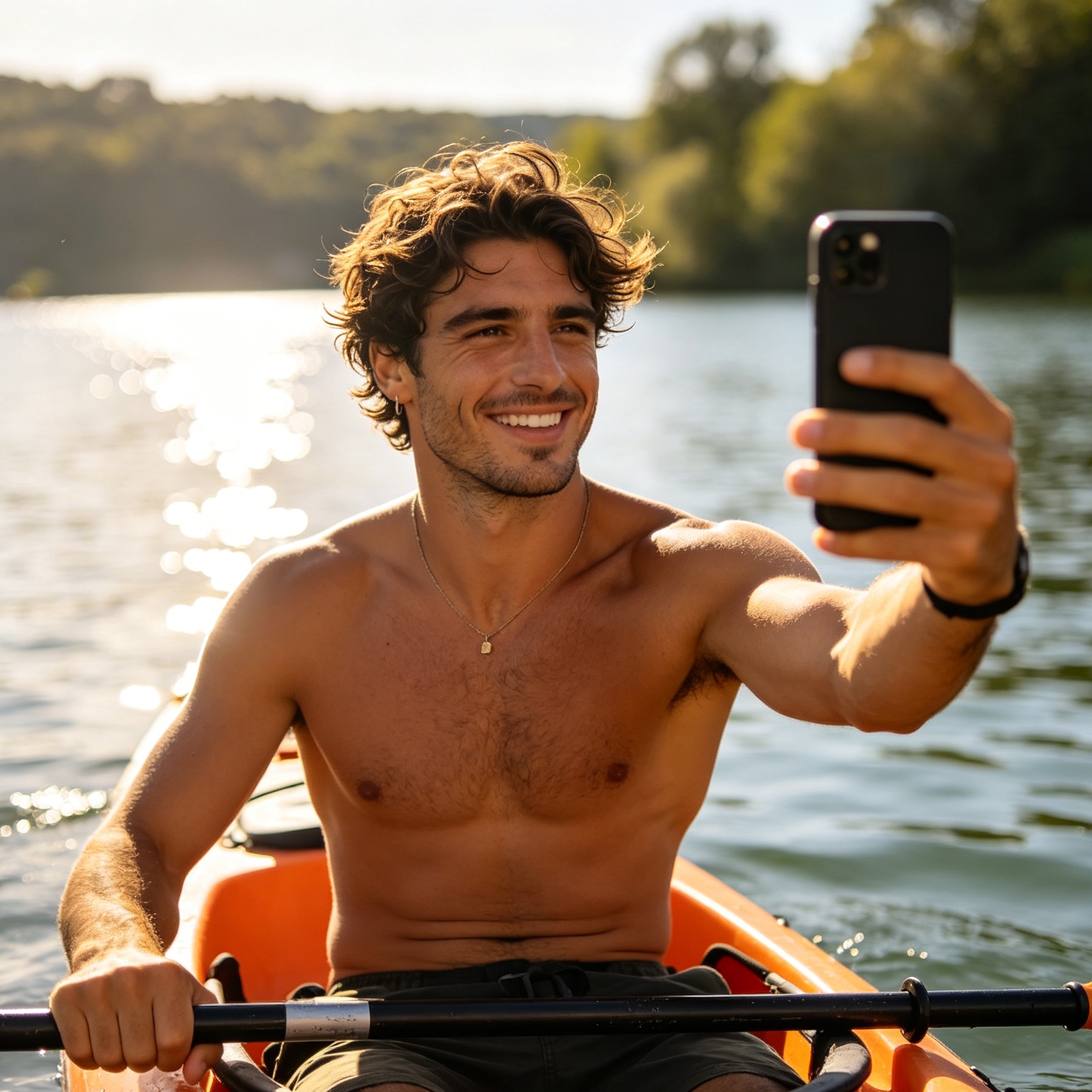
Snapchat is the primary environment where wyll thrives. The platform's architecture is built around ephemeral visual content—photos and videos that disappear after viewing. Consequently, the culture of Snapchat is inherently visual. When someone sends a message asking "wyll?", they are usually asking for a "snap" or a real-time selfie.
There are a few reasons for its dominance on this platform:
- Verification of Identity: In an era of catfishing and sophisticated AI-generated profiles, users often use wyll as a low-stakes way to verify that the person they are talking to matches their profile pictures.
- Visual Interaction: Since Snapchat makes it easy to take and send photos in seconds, asking what someone looks like is less of a "big ask" than it would be on a platform like LinkedIn or via professional email.
- Real-Time Vibe Checks: Often, the query isn't just about general appearance but about a person's current state. "Wyll rn" (What you look like right now) asks for a candid, unfiltered glimpse into the recipient’s current environment or mood.
Usage on TikTok and other social media
On TikTok, wyll often migrates from direct messages into the public comment section. Its function here is slightly different and frequently more performative. You might see a user comment "wyll" under a video where someone is showing off a specific talent, a new outfit, or even a funny reaction. In this context, it can be a form of playful teasing or a genuine compliment, suggesting that the commenter finds the creator’s persona intriguing enough to want to see more of them.
On Instagram and X (formerly Twitter), the term appears less frequently in public and is almost exclusively reserved for DMs. Because these platforms are often used for networking or following public figures, a sudden "wyll" from a stranger is frequently perceived as more intrusive than it is on Snapchat.
The social etiquette and "creep" factor
While the literal meaning of wyll is neutral, its social application is polarizing. The reception of the term depends entirely on "rapport"—the level of mutual trust and comfort established before the question is asked.
When it is considered acceptable
In a mutually flirtatious conversation where both parties have been sharing details about their lives, wyll is often seen as a natural progression. It signals interest and a desire to move the connection forward. It can also be a practical tool when two people are planning to meet in a crowded public space and need to recognize each other.
When it is perceived as rude or desperate
Sending "wyll" as a first message to a stranger is widely regarded as a social faux pas. Digital culture experts often point out that this "zero-effort" approach to conversation can come across as superficial or even predatory. Many users, particularly those on dating apps or Snapchat, report feeling objectified when the first question they receive is about their physical appearance rather than their interests or personality. In online communities, individuals who spam this acronym are often mocked for having "zero game" or being "thirsty."
How to respond to a wyll message
Receiving a wyll message puts the recipient in a position where they must decide how much of themselves they are willing to share. There is no single "correct" way to respond; the best choice depends on your comfort level.
If you are comfortable sharing
If you like the person and want to keep the conversation going, the most direct response is a selfie. On Snapchat, this is usually a quick snap. On other platforms, it might be a recent photo from your gallery. You can also add a playful caption like, "Just me in my natural habitat," or "Looking a bit messy today, but here you go."
If you want to be playful or deflect
If you aren't ready to send a full photo but want to remain friendly, you can use a Bitmoji or a stylized avatar. This fulfills the "visual" request without compromising your actual privacy. Another option is to send a photo of something else in your immediate environment—your pet, the book you’re reading, or your shoes—and say, "This is the current vibe."
If you are uncomfortable
It is entirely appropriate to set boundaries. You might say, "I'm not really big on sending selfies to people I just met," or "I'd rather get to know you better first." If the message came from a complete stranger and feels intrusive, "leaving them on read" (not responding at all) is a common and accepted practice. If the user persists or becomes aggressive, blocking is the most effective tool for maintaining digital peace.
Linguistic history and secondary meanings
While the modern internet has claimed wyll as an acronym, the string of letters has a much longer history in the English language. Exploring these alternative meanings provides a fascinating look at how language evolves over centuries.
Obsolete and Middle English
In Middle English, "wyll" was a common alternative spelling for the word "will." For instance, in 15th-century texts, you might see phrases like "we wyll begynne" (we will begin). It also functioned as a noun meaning "desire" or "intent," and sometimes as an adverb meaning "well."
Old English and Welsh
In Old English, "wyll" (or wiell) referred to a spring of water or a fountain. In modern Welsh, "wyll" exists as a soft mutation of the word "gwyll," which relates to darkness, gloom, or the twilight hour. While these historical and linguistic definitions are unlikely to be what a teenager on Snapchat is referring to, they highlight the phonetic durability of these specific letter combinations.
Rare modern acronyms
In very specific, niche communities, wyll might stand for other phrases, though these are far less common:
- Wish You Luck, Love: Used as a warm sign-off in some circles.
- What You Living Like: A variation used in motivational or "hustle culture" groups to ask about someone's lifestyle or financial success.
- Will You Love Life: A rare, inspirational phrase used in captions.
Despite these variations, if you receive this in a text today, 99% of the time it refers to your physical appearance.
The psychology of the visual demand
Why do we feel the need to ask "wyll" at all? The psychological drive behind the question is rooted in the way humans build trust. Our brains are hardwired to process facial expressions and physical cues to determine whether a person is safe, attractive, or trustworthy. In a text-only environment, we are essentially "blind." Asking for a photo is a subconscious attempt to fill in those missing sensory gaps.
Furthermore, the speed of modern dating and social networking has created a "filtering" mindset. Many users feel that they don't want to invest hours of emotional energy into a conversation only to find out later that there is no physical attraction. While efficient, this mindset can lead to a dehumanizing experience where individuals are reduced to a single image.
Comparing wyll to similar acronyms
To fully master modern slang, it is helpful to see how wyll fits into the broader ecosystem of text-based shorthand. It often travels in the same circles as:
- WYA (Where You At?): A request for your current location or status.
- WYD (What You Doing?): The standard conversation starter asking about your current activity.
- HBU (How About You?): Used to flip a question back to the other person.
- Lmk (Let me know): A way to close a request for information.
- FR (For Real): Used to emphasize the seriousness or truth of a statement.
When these are combined, a conversation might look like this: Person A: "Wyd?" Person B: "Just chilling at home, hbu?" Person A: "Same. Wya though?" Person B: "Downtown. Wyll?"
In this sequence, Person A is moving from activity to location, and finally to physical appearance, representing a typical escalation of digital curiosity.
Safety considerations for younger users
For parents and younger users, the term wyll should be treated with a degree of caution. Because it is a direct request for a photo, it can be a gateway for inappropriate interactions. It is important to remember that once a photo is sent, the sender loses control over how that image is used, stored, or shared—even on apps like Snapchat that notify you of screenshots.
Educating oneself on the importance of "digital footprints" is vital. A good rule of thumb is: if you wouldn't want the photo to be seen by your entire contact list, it’s probably best not to send it in response to a casual "wyll" request from someone you don't know intimately.
The evolution of slang in 2026
As we look at the state of digital language in 2026, acronyms like wyll show no signs of disappearing. They represent a fundamental shift in how we communicate—prioritizing the speed of the thumb over the precision of the pen. While some may argue that this degrades the quality of human interaction, others see it as a vibrant, living evolution of language that allows for a new kind of shorthand intimacy.
Whether you find it annoying, efficient, or simply confusing, wyll is a staple of the current social media lexicon. By understanding its meaning, its origins, and the social rules that govern its use, you can navigate your DMs with confidence and clarity. The next time those four letters pop up on your screen, you'll know exactly what is being asked and, more importantly, you'll know that you have the full power to decide how to answer.