Home
Home
What Is Unschooling? Rethinking Education Beyond the Classroom
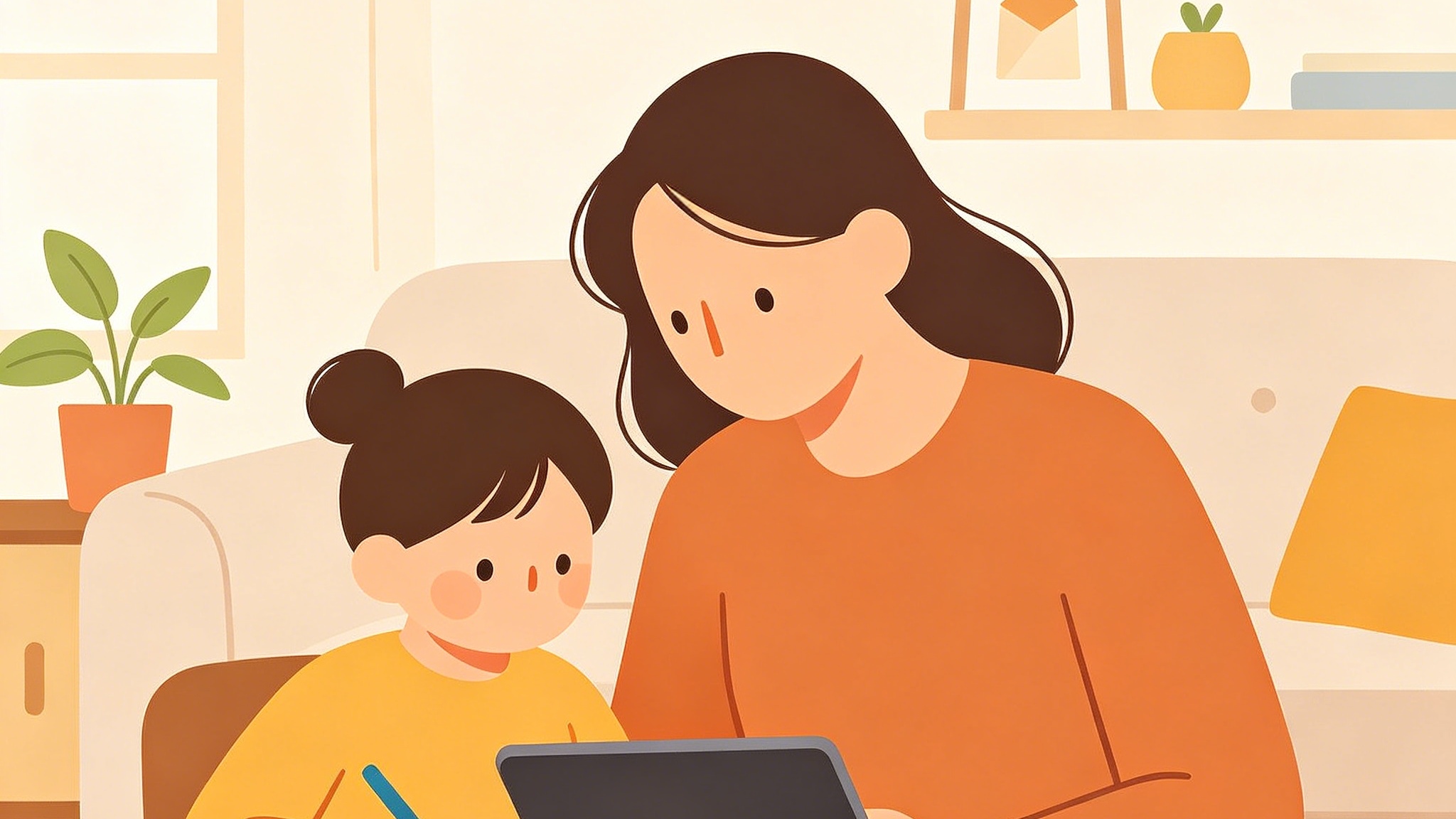
Unschooling represents a fundamental departure from the traditional academic structure that has dominated the global landscape for over a century. It is an educational philosophy and practice that advocates for learner-chosen activities as the primary means of education. In this model, children do not follow a set curriculum, do not take standardized tests, and are not bound by the rigid schedules of a typical school day. Instead, they learn through their natural life experiences, driven by their own curiosity, personal interests, and the world around them.
As the educational landscape continues to shift in 2026, the definition of "schooling" is being scrutinized more than ever. The rise of decentralization in work and life has naturally led to a surge in interest regarding how children acquire knowledge. Understanding what is unschooling requires a paradigm shift: it is not about the absence of education, but rather the presence of a different kind of learning—one that is integrated into the fabric of daily life.
The core philosophy of natural learning
At the heart of unschooling lies the belief that humans are born with an innate desire to learn and understand their environment. Just as a toddler learns to walk or talk without formal lessons or a graded syllabus, unschooling proponents argue that older children can master complex subjects like mathematics, literacy, and science through organic engagement.
This approach rejects the idea that learning is a separate activity that only happens within four walls between 8:00 AM and 3:00 PM. In an unschooling environment, a child might spend an entire week building a computer, another month researching marine biology because of a trip to the coast, or hours every day practicing a musical instrument. The motivation is internal. Because the child chooses the subject, the retention of knowledge is often significantly higher than when a student is forced to memorize facts for a test.
In 2026, where information is ubiquitous and accessible via AI-driven personal tutors and immersive digital libraries, the barrier to self-directed learning has virtually disappeared. The role of the parent shifts from a "teacher" who delivers information to a "facilitator" or "mentor" who provides resources, support, and access to the community.
Distinguishing unschooling from homeschooling
It is common to confuse unschooling with homeschooling, but the differences are profound. While unschooling is technically a subset of homeschooling (education occurring outside of a formal institution), the methodology is distinct.
Traditional homeschooling often mirrors the school system. Parents might purchase a pre-packaged curriculum, set up a classroom space in the house, and follow a strict schedule. There are grades, assignments, and specific goals for what must be learned by a certain age. This is essentially "school at home."
Unschooling, however, is often described as "life-led learning." There is no pre-determined map. If a child shows an interest in baking, the unschooling parent might use that as a gateway to chemistry (reactions of leavening agents) and math (fractions and ratios). If the child stops being interested in baking, they move on. There is no pressure to "finish the unit" if the educational value has been exhausted or if the child’s passion has shifted elsewhere. This flexibility allows for a deep dive into subjects that a traditional school curriculum would only skim over.
The historical context of the movement
The term "unschooling" was popularized in the 1970s by educator John Holt. He observed that the traditional school environment often stifled the natural curiosity of children by replacing it with a fear of failure and a need for external validation. Holt argued that the most effective learning happens when the learner is in control of the process. This sentiment was echoed by other thinkers who viewed compulsory schooling as a form of social engineering that prioritized obedience over critical thinking.
Historically, before the industrial revolution and the implementation of compulsory education laws, most children were educated through a form of what we would now call unschooling or apprenticeship. They learned by participating in the life of their community, working alongside adults, and exploring their surroundings. In a sense, the modern unschooling movement is a return to this ancient, natural way of human development, updated for the complexities of the 21st century.
How unschooling works in the modern era
In 2026, the tools available to unschoolers are more sophisticated than ever. The integration of advanced technology has mitigated many of the traditional concerns about self-directed education.
Digital literacy and self-driven research
Today’s unschoolers are often experts at navigating the digital world. Instead of waiting for a teacher to explain a concept, they use specialized AI platforms to break down complex theories, join global discord communities of specialists, or watch high-level university lectures on platforms that have become the standard for open-source education. This develops a level of digital literacy and research capability that many traditionally schooled students do not acquire until much later in life.
Community and physical spaces
Unschooling does not mean staying at home. In fact, many unschoolers spend less time at home than their schooled peers. They utilize libraries, museums, makerspaces, and community gardens. There is also a growing trend of "unschooling centers" or "self-directed learning centers"—hubs where children can gather to work on their own projects, collaborate with others, and access high-end tools like 3D printers, bio-labs, or recording studios without a forced curriculum.
Real-world apprenticeships
Because they are not bound by school hours, older unschooled children often engage in internships or apprenticeships much earlier than traditional students. A teenager interested in architecture might spend their afternoons at a local firm, not as a student in a class, but as an observer and assistant in a professional environment. This exposure to the "real world" provides context for their learning that a textbook cannot replicate.
Addressing the socialization question
The most frequent question asked about unschooling is: "What about socialization?" The concern is that children will become isolated or fail to develop the skills necessary to interact with their peers.
However, evidence and observation of the unschooling community suggest the opposite. Traditional schooling provides a very specific, and some argue artificial, form of socialization: being grouped with 30 other people of the exact same age and socioeconomic background for six hours a day.
Unschoolers, by contrast, socialize in the real world. They interact with people of all ages—from the librarian and the shopkeeper to the elderly neighbor and other children in their interest-based groups. This "vertical socialization" often leads to children who are more comfortable talking to adults and more capable of navigating diverse social environments. They are not limited to a peer group defined by a birth year; their social circles are defined by shared interests and community involvement.
The role of the parent: facilitator, not lecturer
For a parent, the transition to unschooling requires a significant psychological shift. Most adults were raised in the school system and have internalized the idea that learning is a difficult, unpleasant task that requires a carrot-and-stick approach.
In unschooling, the parent’s job is to "strew" the child’s environment with interesting things. This might mean leaving a new book on the coffee table, taking a different route on a walk to see a construction site, or signing the family up for a community workshop. The parent must be a keen observer of their child’s interests. When a child asks a question, the parent doesn't always provide the answer but instead says, "Let’s find out how we can figure that out."
This requires a high level of trust—trust that the child will eventually learn to read, trust that they will understand basic math, and trust that they will find their way in the world. This is often the most challenging part of the unschooling journey for parents who fear their children will "fall behind."
Potential risks and challenges
While unschooling offers numerous benefits, it is not without its risks and is certainly not a one-size-fits-all solution.
Academic gaps
Because learning is self-directed, a child might spend years focusing on art and history while neglecting formal mathematics. While unschoolers argue that a child will learn math when they have a practical need for it (such as in coding or carpentry), there is a possibility that a student might face a steep learning curve if they suddenly decide to enter a traditional university program that requires standardized prerequisites.
Parental commitment
Unschooling is often more demanding for parents than traditional schooling. It requires a constant presence and a proactive approach to finding resources. It is not a "hands-off" approach; on the contrary, it requires intense engagement to ensure the child has the tools they need to pursue their interests.
Legal and regulatory hurdles
The legality of unschooling varies significantly by region. In some places, it is fully recognized and supported; in others, it exists in a legal gray area or is strictly regulated with mandatory progress reports and testing. Parents must navigate these requirements while trying to maintain the integrity of the unschooling philosophy.
The transition to higher education
There is a common misconception that unschoolers cannot get into college. In reality, many universities have become increasingly open to non-traditional applicants. Unschoolers often apply with portfolios, personal essays, and recommendations that demonstrate a level of passion and self-motivation that sets them apart. However, the lack of a traditional transcript can still be a barrier at more conservative institutions.
Is unschooling right for everyone?
Deciding to pursue unschooling is a deeply personal choice that depends on the child’s personality, the family’s resources, and the local legal environment. Some children thrive in the structured environment of a school, enjoying the clear expectations and the daily social routine. Others find that same structure stifling, leading to anxiety, boredom, and a disengagement from the world.
As we look at the educational trends of 2026, it is clear that the "one-size-fits-all" model is being replaced by a more personalized, modular approach to learning. Unschooling is perhaps the most radical expression of this trend. It prioritizes the mental health and the individual spark of the child over the standardized requirements of the state.
For those considering this path, it is often helpful to start with a period of "deschooling"—a time for both the parent and the child to shed the expectations of the traditional system and rediscover what it feels like to learn for the sake of learning. It is a journey of reclaiming curiosity.
The future of the movement
As the gig economy and remote work continue to redefine what a "career" looks like, the skills fostered by unschooling—autonomy, adaptability, and the ability to learn new things quickly—are becoming the most valuable assets in the labor market. Employers in 2026 are often more interested in what an individual can do and how they solve problems than in where they went to school.
In this context, unschooling is moving from the fringes of society into the mainstream conversation about education. It challenges us to ask a fundamental question: What is the purpose of education? If the goal is to produce individuals who are capable of thinking for themselves, pursuing their passions, and contributing meaningfully to their communities, then unschooling provides a compelling, if unconventional, answer.
Ultimately, the question of "what is unschooling" is not just about a method of education, but about a way of viewing childhood. It is an invitation to see children as capable, curious, and intrinsically motivated individuals who are active participants in their own lives, rather than passive recipients of a pre-determined future. Whether or not a family chooses to go fully "unschooled," the principles of following a child’s interest and integrating learning into life offer valuable lessons for any modern educator or parent.