Home
Home
Why Japanese Wear Masks: It’s Not Just About Germs Anymore
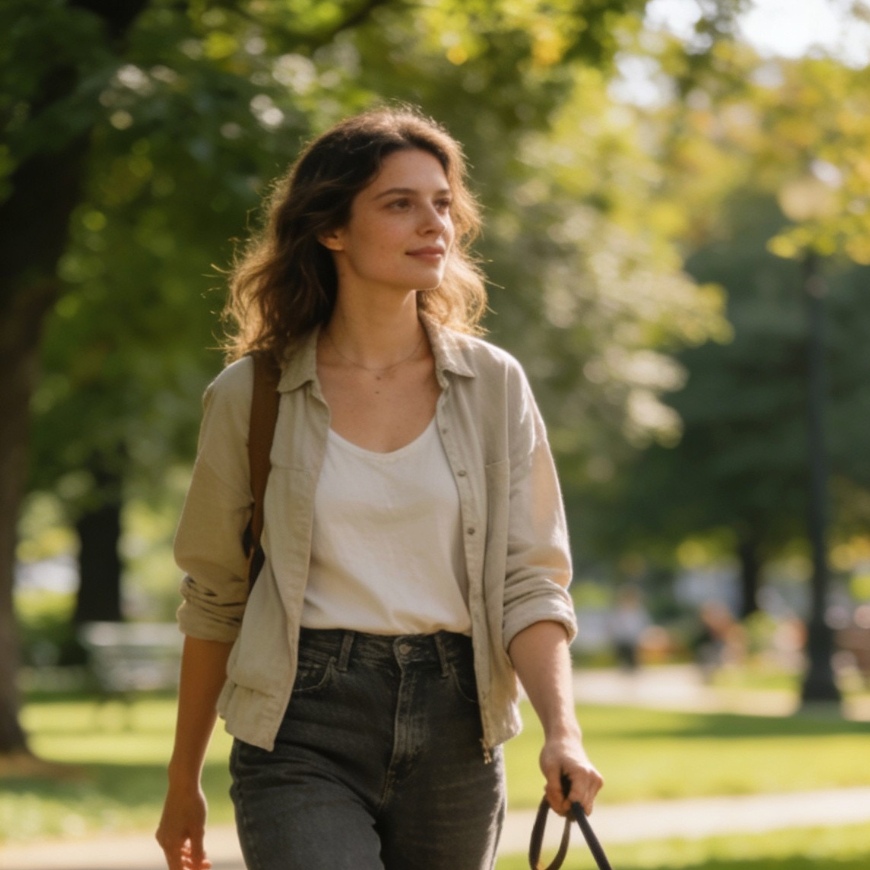
Walking through the streets of Tokyo in mid-April 2026, a striking visual remains constant despite the world having moved long past the height of global health mandates: the sea of face masks. To an outsider, it might look like a society still gripped by the fear of infection. However, the reality of why Japanese people continue to wear masks is a complex tapestry of allergy science, social psychology, fashion, and a deeply ingrained cultural ethos that predates modern pandemics by over a century.
Understanding this phenomenon requires looking beyond the surface-level explanation of hygiene. In Japan, the mask has evolved into a multi-functional tool—a "social shield," a "fashion statement," and even what some local sociologists call "face underwear."
The seasonal culprit: The Kafunsho phenomenon
As of April, Japan is in the thick of its annual battle with Kafunsho, or hay fever. This is perhaps the most practical and widespread reason for mask-wearing during the spring months. Millions of Japanese citizens suffer from intense allergic reactions to the pollen of the Japanese cedar (sugi) and cypress (hinoki).
These trees were planted in massive quantities during the post-war reforestation effort. Decades later, they release clouds of pollen so thick they can sometimes be seen as yellow mist over the mountains. For a sufferer, a high-quality mask is not a choice but a necessity for daily functioning. It filters out the large pollen particles that cause sneezing, runny noses, and itchy eyes. Even as medical treatments for allergies improve in 2026, the physical barrier of a mask remains the first line of defense. When you see someone masked in a park today, they aren't likely fearing a virus; they are simply trying to breathe without sneezing.
The "Meiwaku" culture and collective altruism
One of the most profound drivers of mask-wearing in Japan is the concept of Meiwaku—avoiding being a nuisance to others. From a young age, Japanese children are taught to prioritize the harmony of the group (wa) over individual comfort.
In many Western cultures, a person wears a mask primarily to protect themselves. In Japan, the logic is often inverted: "I wear a mask to protect you from me." If someone has even the slightest tickle in their throat or a minor cough, wearing a mask is considered basic manners. Going to the office or riding a crowded train while visibly sick and unmasked is seen as a sign of self-centeredness and a lack of social responsibility. This altruistic approach to public health was firmly established long before 2020, rooted in the experience of the 1918 Spanish Flu and subsequent influenza outbreaks throughout the 20th century. By 2026, this has become a permanent social reflex.
The rise of the "Face Underwear" (Kao no Pantsu)
In recent years, a fascinating psychological term has gained traction in Japanese media: Kao no pantsu, which literally translates to "face underwear." This refers to the feeling that showing one's bare face in public has become as intimate or exposing as showing one's actual undergarments.
For many, especially the younger generation, the mask provides a sense of psychological security. It acts as a veil that hides the wearer's emotions and perceived physical flaws. Research conducted in late 2025 indicated that a significant portion of university students feel a sense of "unease" or "vulnerability" when not wearing a mask. The mask lowers the stakes of social interaction. You don't have to worry about maintaining a specific facial expression or whether your smile looks genuine. It creates a private space in a very public, densely populated environment.
This "social armor" is particularly useful for those dealing with social anxiety. In a society where "reading the air" (kuuki wo yomu)—or sensing the unspoken feelings of others—is critical, the mask allows an individual to partially withdraw from the constant pressure of non-verbal communication.
The convenience of the "No-Makeup" day
On a more pragmatic level, masks have become a favorite shortcut for personal grooming. For women, in particular, the expectation of wearing full makeup in professional and social settings can be exhausting. A mask covers more than half the face, allowing one to go out with minimal or no makeup while still feeling "put together" or at least appropriately covered.
Similarly, masks are a quick fix for covering up acne, skin blemishes, or a morning face that hasn't quite woken up yet. In the fast-paced life of cities like Osaka or Tokyo, the ten minutes saved by not having to apply foundation or shave perfectly is a luxury that many are unwilling to give up. The mask has become a tool of convenience, a way to maintain a public facade with minimal effort.
Fashion and the aesthetic of the mask
By 2026, the plain white surgical mask has largely been replaced by a dizzying array of "fashion masks." What was once a clinical item is now a staple of the apparel industry. From the 3D "beak-style" masks that are designed to make the face look smaller and the nose bridge higher, to masks made from traditional textiles like Nishijin-ori or Oshima Tsumugi, the mask is an accessory.
Color coordination has become a standard part of getting dressed. Beige, dusty rose, and "greige" (a mix of grey and beige) are popular for their ability to complement skin tones. High-end designers and fast-fashion retailers alike release seasonal collections of masks. For many Japanese youth, the mask is no different from a hat or a pair of glasses—it’s an extension of their personal style. When an item becomes a fashion staple, its original functional purpose often becomes secondary to its aesthetic value.
The post-mandate momentum
Why hasn't the habit faded as it did in London, New York, or Paris? The answer lies in the lack of friction. In many countries, masks were seen as a symbol of government overreach or a loss of personal liberty, leading to a "mask fatigue" that resulted in their immediate removal once mandates ended.
In Japan, there were never strict legal mandates or fines; the government issued "requests" and "guidelines." Masking was a voluntary social consensus rather than a legal requirement. Because it wasn't forced, there was less of a rebellious urge to discard it. Furthermore, the infrastructure for masking is everywhere. You can buy a pack of high-quality, comfortable masks at any konbini (convenience store) for the price of a bottled tea. When an action is low-cost, socially rewarded, and personally convenient, it tends to persist.
Environmental and urban factors
Japan’s urban environment also plays a role. In a country where the majority of the population relies on an incredibly efficient but often overcrowded public transport system, masks provide a physical barrier against the general "urban grime" and odors of the city.
Additionally, masks serve a temperature-regulating function. During the winter, they keep the face warm and prevent the throat from drying out in the arid Japanese cold. In the summer, the market shifts to high-tech "cool masks" made from breathable, moisture-wicking fabrics that provide a slight cooling sensation against the skin. These technological adaptations ensure that there is a mask for every season, making the habit sustainable year-round.
The dichotomy of the modern Japanese face
Despite the ubiquity of masks, it is important to note that Japan is not a monolith. By 2026, a clear dichotomy has emerged. In outdoor settings, parks, and less crowded rural areas, unmasked faces are becoming more common. However, the moment one steps into a department store, an office, or a subway car, the masks go back on.
This behavior demonstrates a highly contextual approach to safety and social etiquette. It’s not about a constant fear of germs; it’s about an assessment of the environment. "Is this a space where I should be considerate of others?" "Is this a space where I want to feel private?" The mask is the answer to these silent questions.
The future of the mask in Japan
Will the Japanese ever stop wearing masks? It seems unlikely that the culture will ever return to the pre-20th-century state of universal bare faces. The mask has proven itself too useful in too many ways. As long as the cedar trees shed their pollen every spring, as long as the winter flu circulates, and as long as the social pressure to be considerate remains a pillar of Japanese identity, the mask will remain.
The Japanese mask culture of 2026 is a unique intersection of ancient social values and modern lifestyle needs. It serves as a reminder that what we see on the surface—a simple piece of fabric—is often a gateway to understanding the deep-seated psychological and cultural mechanisms of a society. Whether it is for health, for fashion, or for the comfort of anonymity, the mask has found its permanent home in the Japanese wardrobe. It is a tool for navigating a complex, crowded, and polite world, one breath at a time.
-
Topic: Factors associated with the mask-wearing behavior of university students in Japan: a cross-sectional study of the post-mask-mandate periodhttps://pmc.ncbi.nlm.nih.gov/articles/PMC12234564/pdf/fpsyg-16-1498560.pdf
-
Topic: Masks in Japan Are Everyday Items | Web Japanhttps://web-japan.org/trends/11_culture/pop202008_mask-culture.html
-
Topic: Why Japanese People Wear Masks? | 5 Interesting Reasons Behind Japanes – Japan Trulyhttps://japantruly.com/why-japanese-people-wear-masks/