Home
Home
Why Sense Check Meaning Is the Most Underrated Skill in Your Toolkit

In an era dominated by high-speed data processing and complex automated systems, the humble sense check serves as a critical circuit breaker. It is the moment where logic meets reality, ensuring that the theoretical models we build actually hold up under the weight of common sense. Understanding the depth of sense check meaning involves moving beyond simple dictionary definitions and exploring the cognitive friction required to prevent expensive mistakes.
what we actually mean by a sense check
At its core, a sense check is a functional verification process. It asks a deceptively simple question: "Does this make sense?" However, in a professional context, this question branches into several layers of scrutiny. Unlike a deep-dive audit or a comprehensive peer review, a sense check is characterized by its speed and its reliance on high-level logic rather than granular detail.
When a team lead asks for a sense check on a quarterly forecast, they are not necessarily asking you to re-calculate every cell in a spreadsheet. They are asking if the final number aligns with the known market conditions, historical performance, and the general direction of the company. It is a sanity check that functions as a safety net for human or algorithmic error.
Technically, the phrase operates as a verb or a noun depending on the usage. To "sense-check" a proposal is to subject it to a quick plausibility test. A "sense check" is the act itself. It is a tool for validation, ensuring that assumptions are grounded and that the output is not just mathematically correct, but contextually relevant.
sense check vs sanity check vs reality check
While these terms are often used interchangeably, they carry distinct nuances in a high-stakes environment.
- Sanity Check: This is typically the most basic level of verification. In software engineering or mathematics, a sanity check ensures that the output is within the realm of possibility. If a program calculates that a human being is 200 years old, it fails the sanity check. It is about catching the "impossible."
- Sense Check: This goes a step further by evaluating the "reasonable." A budget might be mathematically sound and technically possible, but if it requires a 500% increase in productivity with zero additional hiring, it fails the sense check. It evaluates the logic behind the numbers, not just the numbers themselves.
- Reality Check: This often involves an external confrontation with facts. A reality check is what happens when a visionary plan meets the hard constraints of the market, such as supply chain disruptions or sudden regulatory changes. It is a corrective force that brings expectations back to earth.
Understanding these distinctions allows for better communication within teams. Knowing when to ask for a quick sense check versus a full reality check can save hours of unnecessary labor.
the mechanics of a professional sense check
Effective sense checking is not a random glance; it is a structured mental model. To perform one correctly, it helps to adopt a specific set of perspectives.
the role of the truth-teller
When you are asked to sense-check someone else's work, your primary responsibility is to be the objective observer. This requires a level of emotional detachment from the project. You are looking for logical gaps, such as a strategy that assumes high growth in a declining sector or a communication plan that ignores the cultural sensitivities of the target audience.
the implementer’s lens
Another layer of the sense check is the practical feasibility test. An idea might look perfect on a slide deck, but the person who has to execute it day-to-day will see the friction points immediately. A sense check from an implementer’s perspective identifies if the workflow is sustainable or if it will collapse under real-world pressure.
the connector’s perspective
In large organizations, decisions often happen in silos. A strategic sense check must consider how a change in one department affects another. Does this new marketing campaign align with the current technical capabilities of the customer support team? If the answer is no, the plan fails the sense check on a systemic level.
sense check meaning in the age of artificial intelligence
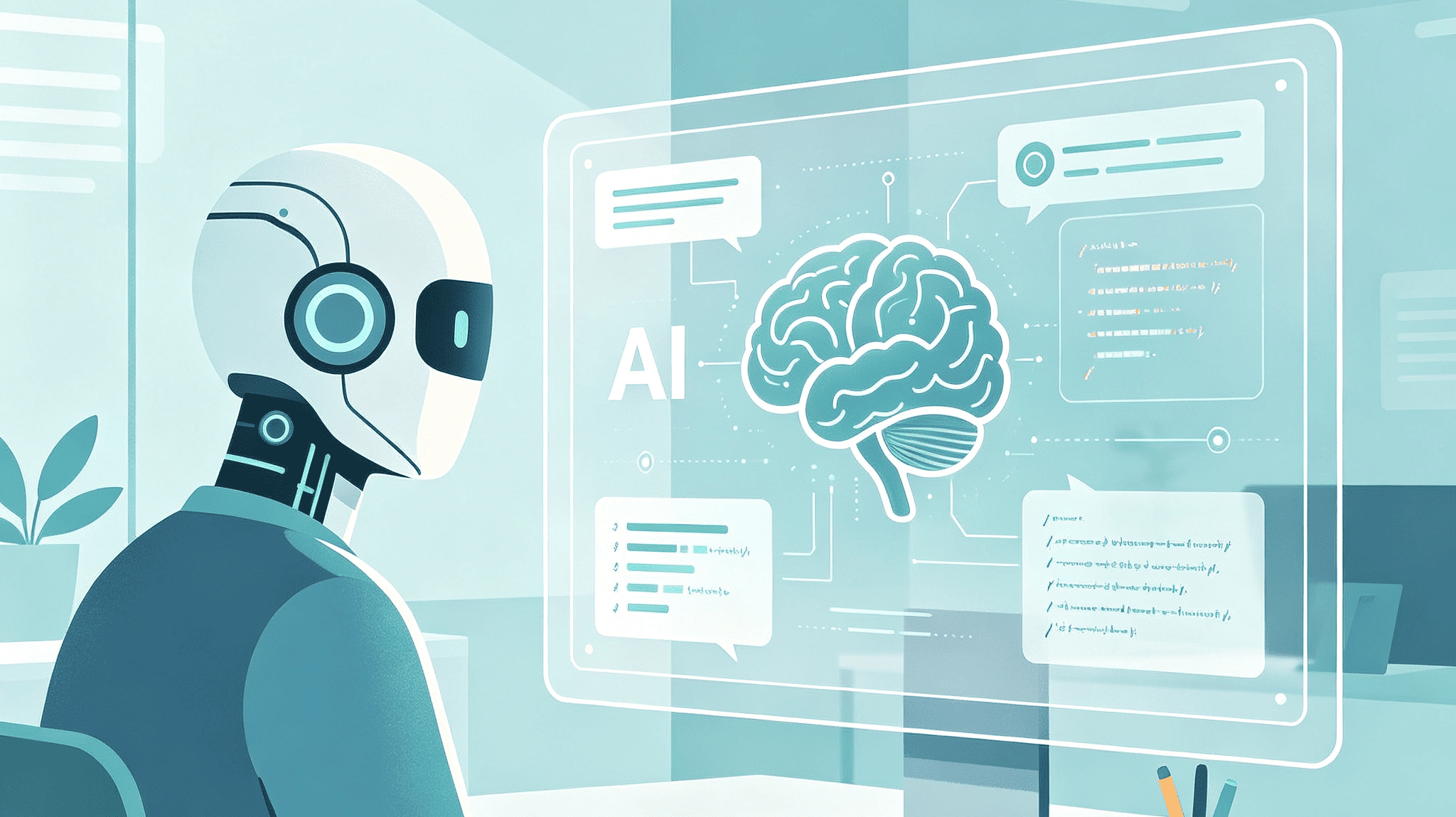
As we navigate the mid-2020s, the importance of sense checking has shifted from human-led tasks to AI-generated outputs. Large Language Models (LLMs) and automated analytical tools are capable of producing vast amounts of content, but they frequently lack "grounding." They can hallucinate, create circular logic, or provide answers that are technically correct but practically absurd.
In this context, the human role is increasingly becoming that of the Chief Sense Checker. We provide the contextual oversight that machines lack. For instance, an AI might suggest a 15% discount across all products to boost revenue, but it might not "know" that the profit margin on your flagship product is only 10%. A human performing a sense check catches this fatal flaw instantly.
This makes the ability to sense-check not just a soft skill, but a core competency for anyone working with automated systems. We must verify the logic of the prompt, the reasonableness of the output, and the safety of the implementation. Without this human-in-the-loop validation, the risks of automated decision-making scale as fast as the technology itself.
common traps and the "sence" check error
A minor but persistent issue is the spelling error. "Sence check" is a frequent misspelling of "sense check." While it might seem trivial, in professional writing, using "sence" can undermine the credibility of the person performing the check. A sense check is about perception and logic (the senses), not a phonetic variation. Ensuring the correct spelling is the first, most basic sense check one can perform on their own work.
Beyond spelling, a more significant trap is confirmation bias. We often perform a sense check with the intention of confirming that our idea is good, rather than trying to find why it might be bad. To counter this, it is useful to practice "red teaming"—a more aggressive form of sense checking where the goal is specifically to find flaws.
Instead of asking, "Does this make sense?" try asking, "If this were to fail, what would be the most likely cause?" This shift in phrasing forces the brain out of its comfort zone and into a state of critical evaluation.
when to integrate a sense check into your workflow
Waiting until the end of a project to perform a sense check is a recipe for disaster. It should be an iterative process integrated at multiple stages:
- At the Request Stage: When you receive a task, do a quick sense check on the instructions. Do you have the resources? Is the deadline realistic? If not, the time to speak up is before the work begins.
- During the Drafting Phase: Mid-way through a project, pause to see if you have drifted from the original goal. It is easy to get caught up in the details and lose sight of the overarching purpose.
- Before the Rollout: This is the final safety check. It involves looking at the finished product through the eyes of the end-user or the client.
how to foster a culture of sense checking
For leaders, the goal is to create an environment where team members feel safe enough to offer an honest sense check. This requires high psychological safety. If an employee feels that pointing out a logical flaw in a manager’s plan will lead to repercussions, they will remain silent.
To build this culture, leaders should explicitly ask for pushback. Use phrases like, "I've made a draft decision, but I need you to poke holes in it. What am I missing?" This signals that you value the sense check over your own ego. It transforms the process from a potential confrontation into a collaborative effort to achieve the best possible outcome.
the broader implications of "sense"
The word "sense" itself carries multiple meanings—from physical perception to moral discernment and sound judgment. A sense check touches on all of these. It requires the intuition to "feel" when something is wrong, the logic to understand why, and the judgment to decide how to fix it.
In professional environments, we often prioritize complexity over clarity. We believe that a 50-page report is inherently more valuable than a one-page summary. However, the true value of any piece of work lies in its ability to be understood and implemented. A sense check is the ultimate tool for simplification. It strips away the jargon and the padding to reveal the core logic beneath.
summary of best practices
To maximize the value of your sense checks, keep the following principles in mind:
- Be specific: Don’t just ask if something is "okay." Ask if the timeline is realistic or if the budget aligns with the goals.
- Choose the right sounding board: If you are checking a technical document, ask someone with technical expertise. If you are checking a marketing message, ask someone who understands the target audience.
- Document the findings: A sense check is only useful if it leads to action. If a flaw is found, ensure there is a clear plan to address it.
- Stay humble: Accept that your own ideas will often fail a sense check. This is not a failure of intelligence; it is a natural part of the creative and strategic process.
By elevating the practice of the sense check from a casual glance to a disciplined professional standard, we can navigate the complexities of modern work with greater confidence. Whether you are validating a budget, a project plan, or an AI-generated strategy, the sense check remains the most reliable bridge between a good idea and a successful reality. It is the final gatekeeper of quality, ensuring that what we put out into the world actually works.