Home
Home
Why the Mullet Haircut Is Dominating in 2026
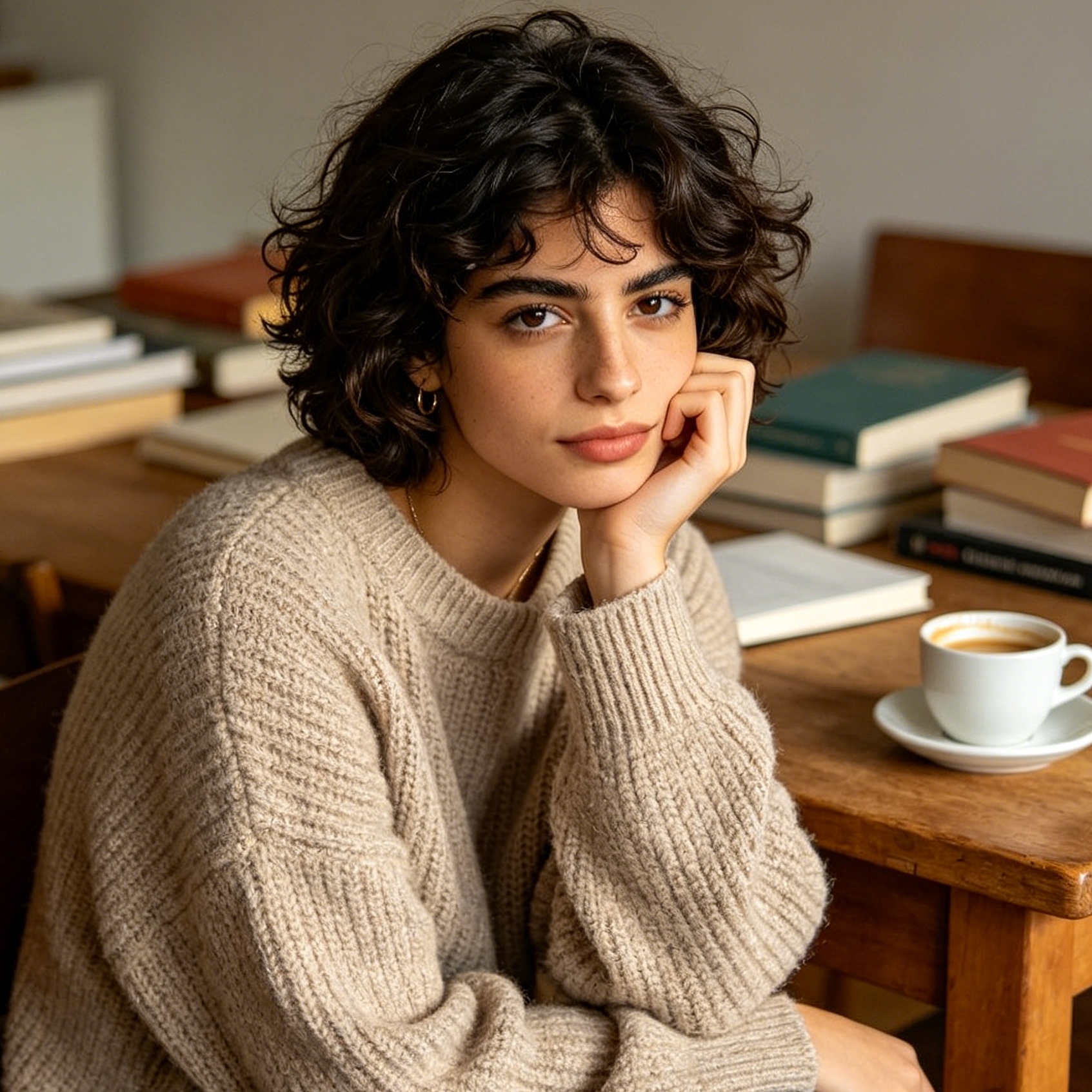
The mullet haircut is characterized by a specific silhouette: short hair at the front and sides, contrasted with significantly longer hair at the back. Often summarized by the enduring phrase "business in the front, party in the back," this hairstyle has transcended its status as a mere vintage trend to become a cornerstone of contemporary gender-neutral fashion. In 2026, the mullet is no longer a relic of the 1980s or a punchline of ironic subcultures; it has evolved into a sophisticated, highly customizable haircut that balances rebellion with high-fashion aesthetics.
The Anatomy of a Mullet Haircut
To understand what a mullet haircut is today, one must look past the caricatures. At its core, the haircut relies on a "disconnection" between the crown and the nape. Unlike a traditional shag or a layered cut where lengths blend seamlessly, a mullet intentionally breaks the gradient.
The "front" typically involves fringe or bangs that can range from micro-bangs to eyebrow-grazing layers. The "sides" are often tapered, faded, or even buzzed to emphasize the width of the face or to create a sharp contrast with the top. The "back" is the defining feature, where the hair extends over the collar, sometimes reaching the mid-back, providing a visual weight that balances the shorter elements at the temples.
The Long History of the "Long Back"
While the term "mullet" is relatively modern, the style itself predates contemporary hair salons by centuries. Historical records suggest that the functional benefits of keeping hair short in the eyes but long at the neck for warmth and protection made it a staple for ancient civilizations.
Ancient Roots and Utility
Historians have noted that Roman Emperor Tiberius wore hair long at the back, a tradition linked to the Claudian family. Similarly, in the 6th century, Byzantine scholar Procopius described young men wearing a "Hunnic" look—short over the forehead and long behind. This wasn't a fashion statement in the modern sense but a practical choice for warriors and laborers who needed visibility without sacrificing the protection provided by longer tresses against the elements.
In North America, early encounters between European settlers and Indigenous peoples, such as the Abenaki, recorded hairstyles that mirrored the mullet's structure—black hair, long behind and short in front. It was a look born of necessity and cultural identity long before it hit the runways of Paris or the stages of London.
The 1970s and 80s Peak
The mullet we recognize today took shape in the 1970s. Rock icons utilized the cut to blur gender lines, combining the masculinity of short hair with the flamboyant femininity of long, flowing locks. By the 1980s, the mullet had reached a fever pitch of popularity, crossing into every demographic from professional athletes to country music stars and suburban teenagers. It became the ultimate symbol of the decade's excess and defiance of traditional grooming standards.
The Beastie Boys and the Naming
Interestingly, the term "mullet" wasn't widely used to describe the haircut until the mid-1990s. The Oxford English Dictionary credits the American hip-hop group the Beastie Boys with popularizing the term in their 1994 track "Mullet Head." Before this, the style was often referred to by regional or occupational names, such as the "hockey hair," the "soccer rocker," or the "ape drape." The Beastie Boys’ satirical take on the style initially pushed the mullet into a period of irony and ridicule that lasted nearly two decades.
The Resurgence: From Ironic to Iconic
The shift back to the mullet began in the late 2010s, accelerated by global events that saw the closure of hair salons. The "home-cut" aesthetic led many to experiment with shears, resulting in a DIY revival. By the mid-2020s, and continuing into 2026, the mullet has been refined. It is no longer a mistake; it is a choice of precision.
Modern iterations, such as the "Wolf Cut" (a hybrid of the mullet and the shag) or the "Mullet-Fade," have integrated contemporary barbering techniques like skin fades and intricate texturizing. This evolution has made the haircut accessible to those who find the traditional 80s version too extreme.
Understanding Different Mullet Variations
Because the mullet is a shape rather than a fixed length, it manifests in several distinct styles in 2026. Choosing the right one depends on hair texture, face shape, and the desired level of maintenance.
The Modern Mullet
The modern mullet is characterized by a softer transition between the front and the back. Instead of a harsh drop-off, stylists use internal layering to create a sense of movement. This version works exceptionally well for individuals with straight or slightly wavy hair who want a look that feels current but not overly aggressive.
The Shaggy Mullet (The Wolf Cut)
This variation leans heavily into texture. It incorporates heavy layers throughout the crown to create volume, mimicking the mane of a wolf. It is particularly popular among those with fine hair, as the layering provides an illusion of thickness and height.
The Faded Mullet
A favorite in urban barbering, the faded mullet features sides that are tapered down to the skin. This creates a sharp, clean silhouette that frames the face. The contrast between the bare skin on the sides and the long hair at the back is striking and requires regular maintenance to keep the fade crisp.
The Curly/Coily Mullet
Often called a "mull-hawk" when combined with curls, this style celebrates natural texture. Curls provide natural volume and a rounded shape to the back, preventing the hair from looking flat or limp. For those with coily hair, the mullet offers a way to manage bulk while showcasing length.
Is the Mullet Right for Your Face Shape?
A common misconception is that the mullet only suits specific facial structures. However, because the proportions of a mullet can be adjusted, it is surprisingly versatile.
- Oval Faces: Most mullet styles work here. Since the face is balanced, one can experiment with extreme contrasts or very short micro-bangs.
- Square and Rectangular Faces: A shaggy mullet with plenty of texture helps soften the jawline. Avoiding extremely short sides can prevent the face from looking too boxy.
- Heart-Shaped Faces: Keeping volume at the nape of the neck (the back of the mullet) helps balance a wider forehead and a narrower chin. A side-swept fringe can also complement this shape.
- Round Faces: To elongate the face, stylists often recommend adding height at the crown. A faded mullet with sharp angles can help define the cheekbones and provide a slimming effect.
The Cultural Significance of the Mullet in 2026
In the current fashion landscape, the mullet serves as a visual shorthand for a rejection of traditional beauty standards. It is a gender-neutral haircut that doesn't conform to the binary of "short for men, long for women." This fluidity has made it a staple in queer culture and among those who prioritize self-expression over conventional attractiveness.
Furthermore, the mullet's association with sports—particularly hockey and soccer—continues to evolve. Athletes in 2026 often use the hairstyle as a form of branding, a way to stand out in a crowded digital media landscape. The "playoff mullet" remains a tradition in various leagues, symbolizing team unity and a focus on performance over vanity.
How to Communicate with Your Barber
Walking into a shop and simply asking for a "mullet" can be risky, given the variety of styles available. Clarity is essential for a successful result.
- Define the Disconnection: Decide how much of a contrast you want between the sides and the back. Do you want a seamless blend or a sharp, noticeable jump in length?
- Choose Your Fringe: The front of the mullet determines how it frames your face. Options include blunt bangs, curtain bangs, or messy, textured layers.
- Establish the Perimeter: How long should the back be? Should it hit the shoulders, the collarbone, or the mid-back? Should it be cut straight across or thinned out into "v-shaped" points?
- Bring Visual Aids: A photo is the most effective tool. Even if the person in the photo has a different hair texture, it gives the stylist a clear idea of the silhouette you are aiming for.
Styling and Maintenance
Maintenance for a mullet depends on the specific variation. A faded mullet may require a trip to the barber every two to three weeks to maintain the sides. A shaggy, longer mullet can often go eight to twelve weeks between trims, as the "undone" look is part of its charm.
Essential Products
- Sea Salt Spray: Ideal for creating that "lived-in" texture and grit, especially for shaggy or modern mullets.
- Matte Pomade or Clay: Useful for adding definition to the shorter layers at the top and front without making the hair look greasy.
- Curl Cream: Essential for those with natural curls to maintain moisture and prevent the back of the mullet from becoming frizzy.
- Dry Shampoo: Since volume at the crown is key to the mullet's shape, dry shampoo can help lift roots and extend the time between washes.
The Drying Process
Air-drying is often the best approach for a textured mullet, as it allows the natural movement of the hair to take center stage. However, using a diffuser on a low heat setting can help boost volume at the crown and define curls in the back. For a sleeker look, a flat brush and a blow dryer can be used to smooth the fringe while keeping the back natural.
The Psychology of the Mullet
Why does a hairstyle that was once mocked become a global phenomenon? The psychology of the mullet lies in its inherent contradiction. It allows an individual to occupy two spaces at once: the professional and the rebellious. In an era where remote work and digital personas have blurred the lines between our private and public lives, the mullet is the perfect aesthetic representation of that duality.
It is a haircut that demands attention but doesn't seek approval. Whether it's the "high-fashion mullet" seen on runways or the "utilitarian mullet" worn by outdoor enthusiasts, the style remains a powerful tool for individual identity. It signals that the wearer is aware of fashion history but isn't a slave to it.
Final Thoughts on the Trend
As we look at the hair trends of 2026, the mullet stands out not as a fleeting fad, but as a versatile framework for self-expression. It has moved past the stigma of the 90s and the kitsch of the early 2000s to find a permanent place in the modern grooming repertoire. Whether you are looking for a radical change or a subtle update to your current look, the mullet offers a range of possibilities that few other haircuts can match. It is, quite literally, a cut that offers the best of both worlds.
-
Topic: Mullet (haircut) - Wikipediahttps://en.wikipedia.org/wiki/Mullet_(haircut)#:~:text=Mullets%20were%20worn%20by%20rock,McCartney%20in%20the%20early%201970s.
-
Topic: Mullet (haircut)https://en.wikipedia-on-ipfs.org/wiki/Mullet_(haircut)
-
Topic: 24 Mullet Haircut Ideas for a Cool-Girl Chophttps://www.instyle.com/mullet-haircut-women-7968458